

检测到并清除了危险字符!
Home> News> Why Insurers are Turning Away from Commercial Fleets—And How Data is Reversing the Trend

Why Insurers are Turning Away from Commercial Fleets—And How Data is Reversing the Trend

2026 03-11

Commercial vehicle insurance is currently facing a "dual crisis" of escalating liability losses and rising repair costs, with the industry recording underwriting losses for 13 consecutive years and combined loss ratios consistently exceeding 100%. To combat this, fleet operators are transitioning from traditional risk management to AI-driven safety ecosystems that provide "Truth in Data." By integrating video telematics and real-time driver coaching, solution providers like Streamax are converting these high-risk liabilities into predictable, insurable assets, allowing high-risk fleets to reduce accident frequency by up to 80% and protect drivers against fraudulent claims, effectively restoring their insurability in a tightening market.
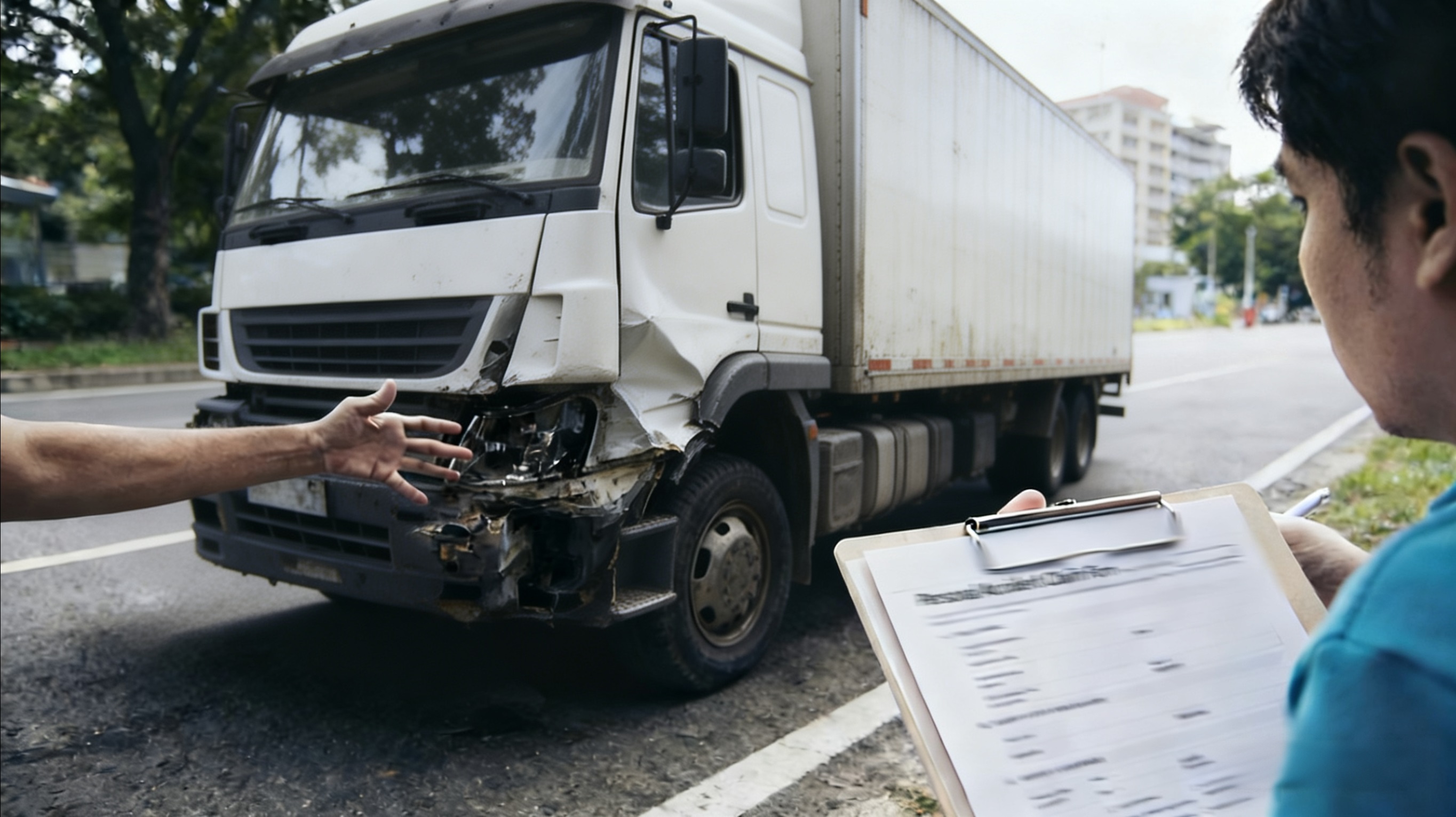
Use Streamax AI DMS system to detect driver fatigue and trigger instant alerts


For over a decade, the commercial vehicle insurance sector has been one of the most persistently underperforming segments in the property-casualty landscape. Despite 55 straight quarters of premium rate increases, insurers continue to pay out more in claims and expenses than they collect in premiums . This deterioration is driven largely by "social inflation"—a trend of rising claim costs fueled by increased litigation and "nuclear verdicts" exceeding $10 million. Recent actuarial analysis also reveals that social and economic inflation added between $52.0 billion and $70.8 billion in additional losses and defense costs to commercial auto liability between 2015 and 2024, driven by a 93.5% surge in claim severity.

In response, insurers have tightened underwriting standards or completely withdrawn from specific high-risk sectors. Three segments in particular—New Energy Light Trucks, ride-hailing platforms, and specialized mining vehicles—now face a critical dilemma: essential for modern commerce but increasingly difficult to cover.


The Paradox of New Energy Light Trucks: Clean but Uninsurable?

The transition to electric fleets, particularly in the "last-mile" delivery sector, presents a unique dilemma. While these vehicles are essential for sustainability, they are increasingly difficult to insure due to a combination of high asset value and high human risk.

The Valuation and Repair Constraint

New Energy Vehicles (NEVs) incorporate advanced technology and expensive battery systems, resulting in significantly higher upfront costs and replacement values compared to diesel trucks. For insurers, this translates directly into higher premiums for collision and comprehensive coverage. Furthermore, battery damage often leads to total losses or specialized, expensive repairs that traditional shops cannot handle, driving up loss ratios for insurance providers.

The Entry Barrier and Workload Risk

The explosive growth of E-commerce has led to a massive demand for delivery drivers, often resulting in lower entry barriers and a younger, less experienced workforce. Research indicates that light and medium truck drivers are more likely to be involved in rear-end crashes and distracted driving incidents than their heavy-truck counterparts. For an insurer, a fleet of high-value electric trucks operated by inexperienced drivers represents a catastrophic risk profile.

Streamax Solution: Streamax bridges this gap by providing an "AI co-pilot" for the driver. By deploying systems like the AD Plus 2.0, LCV fleets can provide real-time audio and visual alerts for tailgating, lane departures, and driver distraction. This proactive coaching reduces accident frequency by helping drivers correct behavior in the moment, providing the "Truth in Data" needed for insurers to price risk based on actual safety outcomes rather than broad demographic proxies.


Ride-Hailing: Combating the Epidemic of Claims Fraud

In the ride-hailing (PHV) sector, the primary insurance hurdle is the proliferation of staged accidents and claims fraud. This "crash-for-cash" epidemic costs insurers an estimated $20 billion annually.

The Staged Accident Crisis

Criminal rings frequently target commercial ride-hailing vehicles for "swoop and squat" scams, where a lead vehicle brakes sharply to force a rear-end collision. Without objective evidence, the commercial driver is almost always presumed at fault. Furthermore, the rise of generative AI has made it easier for fraudsters to fabricate hyper-realistic images of vehicle damage or false documents, making traditional manual verification increasingly ineffective.

Streamax Solution:Streamax video telematics acts as an objective digital witness. When an incident occurs, the system automatically triggers an upload of high-definition video from both road-facing and cabin-facing cameras to a secure cloud platform. This multi-angle evidence allows ride-hailing fleets to:

  • Support Driver Defense: Prove the driver was attentive and that the third party intentionally caused the crash.

  • Speed Up Claims: Deliver key evidence upfront to help insurers process claims more efficiently needs upfront — potentially reducing resolution time from months to days and lowering associated legal costs. 


Specialized Mining Vehicles: Safety in Extreme Environments

Mining operations represent the most extreme challenge for insurance underwriting. Massive machinery, hazardous terrain, and 24/7 duty cycles create an environment where human error has catastrophic financial consequences.


The Hazards of Fatigue and Visibility

Driver fatigue is a leading contributor to mining accidents, accounting for approximately 13% of major commercial crashes. The monotony of haul routes combined with long shifts often leads to "microsleeps"—brief episodes of unconsciousness that are lethal when operating an 80,000-lb vehicle. Furthermore, dust and low-light conditions often compromise the operator's visibility.

Streamax Solution: The specialized Streamax Mining Solution enhances situational awareness where human senses fail.

  • DMS Fatigue Monitoring: Uses AI-based vision models adapted for drivers wearing helmets and masks to detect early signs of drowsiness even in high-vibration environments.

  • Operational Protection: Beyond driving safety, the system includes "Bucket Tooth Detection" to prevent equipment damage and unplanned downtime, which protects the fleet’s technical integrity—a key metric for business interruption insurance.


Data-Driven Underwriting: A Path to Profitability

The convergence of AI and telematics is fundamentally redefining the relationship between the insurer and the fleet owner. Insurers are now transitioning from "proxies" (like driver age) to "primary data" (like real-time behavior scores).

Risk Category

Conventional Methodology

AI-Driven "Truth in Data"

Actuarial/Operational Impact

Claim Validity

Subjective manual reporting

Immutable HD video evidence

Direct fraud mitigation

Driver Risk

Demographic & historical proxies

Dynamic behavioral scoring

Structured premium discounts

Accident Severity

Retrospective forensic review

Real-time ADAS/DMS intervention

Significant loss-ratio reduction

Studies have shown that fleets using AI-powered safety programs can reduce their loss ratios—the ratio of losses to premiums—by as much as 80%. This allows once-rejected fleets to regain access to competitive insurance markets by demonstrating a lower risk profile through verifiable safety performance.


FAQ Module:

1. How does AI video telematics reduce insurance premiums?

AI telematics replaces broad demographic proxies with precise behavioral data, enabling insurers to reward safe driving with discounts while adjusting rates for high-risk behavior. This data-driven pricing incentivizes drivers to improve their habits through real-time feedback and coaching, which reduces accident frequency and lowers the overall "Loss Ratio".

2. Can AI detect insurance fraud in ride-hailing?

Yes. Multi-angle cameras capture the "swoop and squat" patterns typical of staged accidents. AI can also analyze metadata and pixel consistency to detect if damage photos have been manipulated by generative AI.

3. What is the ROI for a fleet installing AI safety systems?

Most fleets see a return on investment within 12 to 18 months. This comes from reduced accident costs, lower insurance premiums, and improved operational efficiency.


Streamax is committed to the responsible and ethical deployment of technology. Our solutions are developed with a privacy-by-design and security-first architecture. All data processing occurs locally on the edge device, ensuring that personally identifiable information, including biometric data, is neither stored nor transmitted to the cloud, thereby adhering to global data sovereignty regulations.

The AI features and performance metrics referenced in our materials are based on data from extensive internal testing and validation under controlled, laboratory-style scenarios. These results are provided to demonstrate our technological capabilities and direction; however, actual performance may vary in real-world operating environments and should be validated by the end-user.

Our AI models are trained on diverse, legally sourced datasets and are designed to function strictly as decision-support tools for human operators, not as autonomous systems. We actively mitigate algorithmic bias and our development process aligns with emerging global standards for AI ethics and functional safety.